
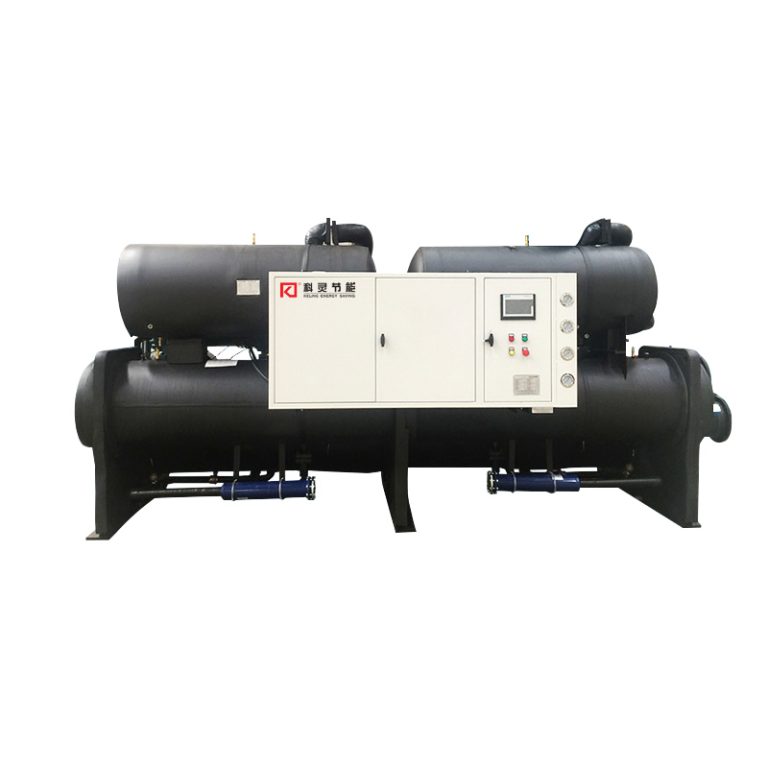
A Water/Ground Source Heat Pump is a highly efficient and energy-saving air conditioning system that utilizes shallow geothermal resources (also referred to as ground energy, including groundwater, soil, or surface water) to provide both heating and cooling. During operation, the system consumes a small amount of high-grade energy (such as electricity) to transfer low-grade thermal energy to a higher temperature level. In winter, it extracts heat from the ground energy source, raises its temperature, and supplies it for indoor heating; in summer, it removes heat from indoor spaces and releases it back into the ground.
Working Principle:
The Water/Ground Source Heat Pump mainly consists of three components: the ground heat exchange system, the heat pump unit, and the indoor terminal system. The ground heat exchange system is buried underground and is responsible for collecting low-grade thermal energy. The heat pump unit serves as the core component, facilitating energy conversion through a refrigerant cycle. The indoor terminal system then distributes the converted heat or cooling to indoor spaces.
During winter heating, the heat pump unit extracts heat from the soil or groundwater through ground loops. After the compressor raises the temperature, the heat is released indoors to provide heating for the building. In this process, the evaporator absorbs underground heat, the compressor pressurizes and heats the refrigerant, and the condenser releases heat into the building.
During summer cooling, the heat pump unit transfers indoor heat to the soil or groundwater through ground loops, thereby cooling the building. In this case, the evaporator absorbs indoor heat, while the condenser dissipates heat through the groundwater, completing the cooling cycle.
Advantages of Ground Source Heat Pumps:
High Efficiency and Energy Savings:
Ground source heat pumps offer high energy efficiency, consuming 1 kW of electricity to deliver over 4 kW of heating or cooling capacity. This makes them 30% to 50% more energy-efficient than traditional air conditioning systems. This efficiency is attributed to the stable temperature characteristics of shallow geothermal resources, allowing the heat pump unit to operate efficiently across different seasons.
Environmentally Friendly and Renewable:
Ground source heat pumps utilize shallow geothermal resources, which are virtually infinite and renewable. As a result, they produce no greenhouse gases or other pollutants during operation, making them an eco-friendly and sustainable energy solution.
Stable and Reliable:
Thanks to the consistent underground temperatures throughout the year, the operation of ground source heat pumps remains unaffected by external climate conditions. This ensures stable and reliable heating and cooling services, allowing the system to maintain high efficiency even under harsh weather conditions.
Long Service Life:
The service life of a ground source heat pump system far exceeds that of traditional heating equipment. The underground loop heat exchanger, buried deep in the ground, is protected from erosion caused by wind, sun, rain, and other harsh environmental factors. Under normal operating conditions, the underground loop heat exchanger can last for over 50 years. Meanwhile, the indoor heat pump unit, with careful design and manufacturing, can achieve a service life of approximately 20 years with regular maintenance.
Applications:Ground source heat pumps are suitable for various types of buildings, including residential, commercial, and industrial structures. Additionally, they can provide supplementary functions such as domestic hot water, further expanding their range of applications.